When Your Air Conditioning Dies, So Does Your Business Day
Picture this. It’s 97 degrees outside. Your storefront is packed with customers, or your office is full of employees trying to get work done. Then it happens. The air conditioning stops.
Within twenty minutes, your building feels like a sauna. Customers start leaving. Employees start complaining. And you’re standing there wondering how fast you can get someone on the phone.
Sound familiar? If you own a small business in Warner Robins or Eastman, you already know this fear. An HVAC failure isn’t just uncomfortable. It’s expensive. Lost sales, lost productivity, spoiled inventory — it adds up fast.
Here’s the thing. This article isn’t going to just tell you to “call a technician.” You already know that. Instead, we’re going to break down exactly what a commercial air conditioning failure actually costs you, how to spot trouble before it shuts you down, and what a real emergency response should look like in Middle Georgia’s brutal summer heat.
Why Commercial AC Failures Hit Small Businesses So Hard
Homeowners can survive a hot night with a few fans and an open window. Businesses can’t.
A retail shop without air conditioning loses foot traffic almost immediately. Nobody wants to browse in a hot store. A restaurant without cooling risks food safety violations. An office without climate control sends productivity into a nosedive, and honestly, who can focus when they’re sweating through their shirt?
It’s frustrating when a single mechanical failure threatens your whole operating day. But that’s exactly what happens with commercial HVAC systems, because they run longer hours, cool larger spaces, and carry more weight than a typical home unit.
The Hidden Costs Nobody Talks About
Most business owners think about the repair bill first. That’s natural. But the repair bill is often the smallest part of the damage.
Think about what else is on the line. Lost sales during peak hours. Employees sent home early, which still costs you in payroll or missed deadlines. Perishable inventory that spoils without proper cooling. Even your reputation takes a hit if customers associate your business with being “that hot store” or “that stuffy office.”
This doesn’t work the same way for every business, of course. A law office might lose a few hours of productivity. A restaurant might lose an entire dinner rush and thousands of dollars in food. The exception is businesses with backup systems already in place — but most small operations in Middle Georgia don’t have that luxury.
Warning Signs Your Commercial AC Is About to Fail
Here’s what matters most: most commercial HVAC failures don’t come out of nowhere. There are warning signs. You just have to know what to look for.
Weak airflow is usually the first clue. If vents that used to blow strong are now barely pushing air, something’s wrong inside the system. Strange noises matter too. Grinding, squealing, or banging sounds are your unit’s way of waving a red flag.
Uneven cooling is another big one. If the front of your store stays cool but the back office feels like an oven, your system is struggling to keep up. And don’t ignore rising utility bills. When a unit works harder than it should, your electric bill quietly climbs before the unit ever fully quits on you.
Want to know the real secret? Businesses that catch these signs early spend far less than businesses that wait until the system dies completely. A scheduled inspection catches problems while they’re still cheap to fix.
What a True Emergency Response Should Look Like
Not every HVAC company treats commercial emergencies the same way. Some make you wait days. Others show up but don’t have the parts on hand. That’s a problem when every hour without cooling costs you money.
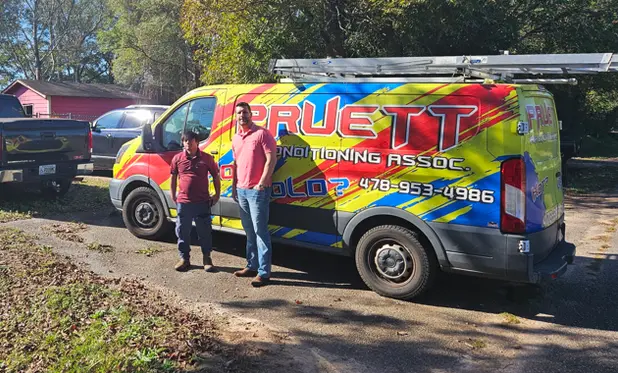
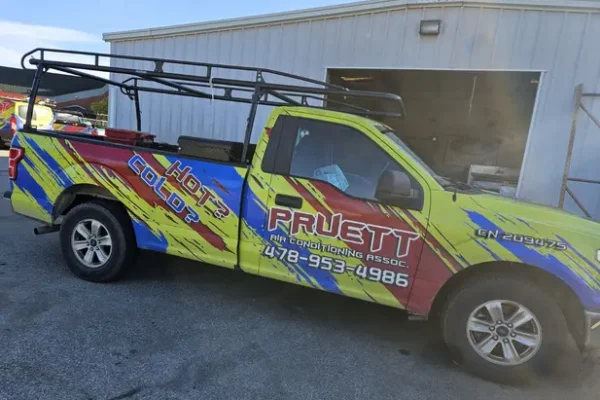
Pruett Air Conditioning has served Middle Georgia’s commercial customers from Warner Robins to Eastman for nearly five decades. As a Carrier Factory Authorized Dealer, the company gets priority parts access and rebate programs most local competitors simply don’t have. That matters when your walk-in cooler or your office system goes down and you need a real fix, not a temporary patch.
Being a NATE and EPA certified commercial air conditioning provider isn’t just a credential on a wall. It means the technician showing up at your business actually understands complex commercial systems, not just residential units.
Comparing What Businesses Should Expect From an HVAC Partner
Not all HVAC providers offer the same level of commercial support. Here’s a quick breakdown of what separates a reliable partner from a risky gamble.
| What to Look For | Why It Matters for Your Business |
|---|---|
| Same-day emergency response | Every hour without cooling costs revenue and comfort |
| Carrier Factory Authorized Dealer status | Faster access to parts and manufacturer-backed rebates |
| NATE/EPA certified technicians | Proper handling of complex commercial-grade equipment |
| Local, community-rooted business | Technicians familiar with Middle Georgia’s heat and older commercial buildings |
| Preventive maintenance plans | Fewer surprise breakdowns during peak business hours |
| Decades of service history | Proven reliability across generations of local customers |
Look at that list again. Notice how “reliability” shows up more than once? That’s not an accident. For business owners, reliability isn’t a nice-to-have. It’s the whole point.
Preventing the Next Breakdown Before It Costs You
You can’t eliminate every risk. Equipment ages. Parts wear out. But you can dramatically reduce your odds of a surprise shutdown during your busiest week.
Regular maintenance is the single biggest factor. A twice-yearly inspection catches worn belts, low refrigerant, and clogged coils before they turn into a full system failure. Businesses that skip maintenance almost always pay more in emergency repairs than they would have spent on routine checkups.
A structured commercial maintenance plan takes the guesswork out of it entirely. Instead of hoping your system holds up through another Georgia summer, you get scheduled inspections built around your business’s operating hours, so there’s no disruption to your day.
And here’s something a lot of business owners don’t consider. Building a relationship with a local HVAC company, one that actually knows your building, your equipment history, and your community, means faster diagnosis when something does go wrong. That’s a real advantage over calling a random name off a search results page during an emergency.
Pruett has been part of Middle Georgia’s business community since 1977, supporting local partnerships through groups like Habitat for Humanity and area chambers of commerce. Learn more about that community involvement here. That’s not marketing fluff. That’s nearly fifty years of showing up for the same neighborhoods, year after year.
Frequently Asked Questions
How much does a commercial air conditioning repair typically cost?
Costs vary widely depending on the size of your system and the type of failure. Minor repairs, like a faulty capacitor or thermostat issue, might run a few hundred dollars. Major repairs involving compressors or refrigerant leaks can run into the thousands. A maintenance plan helps catch small issues before they become expensive ones.
How fast can a commercial HVAC company respond during a breakdown?
Response times depend on the provider, but businesses should look for same-day emergency service whenever possible. Every hour without cooling in Middle Georgia’s summer heat adds up in lost sales and discomfort, so response speed should be a top factor when choosing an HVAC partner.
How often should a commercial air conditioning system be serviced?
Most commercial systems benefit from inspections twice a year, once before peak summer demand and once before winter. Businesses with heavier equipment use, like restaurants or medical offices, may need more frequent checkups.
Can a small business save money with a maintenance contract instead of paying for repairs as needed?
Yes, in most cases. Maintenance contracts catch small problems early, extend equipment life, and often include priority scheduling during emergencies. For businesses where downtime directly affects revenue, the upfront cost of a maintenance plan is usually far less than the cost of an unexpected shutdown.
Don’t Let the Next Heat Wave Catch You Off Guard
Here’s the bottom line. Air conditioning failure isn’t just an inconvenience for a small business. It’s lost revenue, frustrated customers, and a scramble to find help fast.
But it doesn’t have to end in a crisis. Watch for the warning signs. Weak airflow, strange noises, uneven cooling, rising bills — they’re all telling you something before the system fully quits. Partner with a local company that actually understands commercial systems and shows up when you need them, not three days later.
Middle Georgia has trusted Pruett Air Conditioning for generations, from Warner Robins to Eastman, because reliability isn’t a slogan here. It’s nearly fifty years of proof. If your business can’t afford another hot, closed-door afternoon, reach out to Pruett before the next heat wave puts you to the test.