You Got the Keys. Did You Get the Furnace History?
Closing day is a blur. You sign about a hundred pages, shake some hands, and walk into a home that’s finally yours.
Then the first cool night in Middle Georgia rolls in. You flip the thermostat to “heat” and stand there, listening. Something kicks on. Something smells a little dusty. And a question hits you: When was this thing last checked?
If you have no idea, you’re not alone. Most new homeowners never get a service record for the furnace. The sellers didn’t keep one, the inspector gave it a quick look, and the paperwork stack had everything except the one thing you need now.
That’s frustrating. But it’s fixable. In this guide, you’ll learn how to dig up your furnace’s hidden history, what furnace maintenance a “mystery” system really needs, which jobs you can handle yourself, and when it’s time to call in help.
Why “No Records” Is a Bigger Deal Than It Sounds
Here’s the thing. A furnace with no service history isn’t automatically a bad furnace. Plenty of neglected systems still run fine.
The problem is that you can’t tell which kind you have. A furnace can light, blow warm air, and still have a problem growing inside it. A dirty flame sensor. A clogged filter that’s making the motor work too hard. A crack in the heat exchanger, the metal wall that keeps combustion gases out of your living space.
You might feel a little overwhelmed by that last one. Fair enough. But knowing is better than guessing, and a first visit clears up most of the mystery in about an hour.
The Middle Georgia Twist
Our winters are short. Many furnaces around Warner Robins, Perry, and Eastman sit untouched for eight or nine months a year.
That long nap matters. Dust settles on burners. Spiders and mud daubers move into vent pipes. Parts that sat still all summer can stick when they’re finally asked to move. So a furnace that “worked last winter” for the previous owner may not be ready for yours.
Play Detective: How to Find Your Furnace’s Hidden History
Sound familiar? You’ve searched the closing folder twice and found nothing. Don’t give up yet. Your furnace usually leaves clues, and you can find most of them in ten minutes with a flashlight.
Clues Hiding in Plain Sight
Start at the furnace itself. Look for a metal or foil label on the side of the cabinet or just inside the front panel. That’s the data plate. It lists the model and serial number, and on many brands, the serial number hides the year it was built.
Next, look around the cabinet and on the nearby wall for service stickers. Many HVAC companies leave a small tag with a date and phone number after each visit. Find one, and you’ve found your first record.
Then pull the air filter. Is it gray and fuzzy? Packed with dust? Or fairly clean? A filthy filter tells you more about the last owner’s habits than any paperwork could.
| Clue | Where to Look | What It Tells You |
|---|---|---|
| Data plate (model and serial number) | Side of cabinet or inside front panel | Rough age of the furnace and the info needed to check warranty status |
| Service stickers or tags | Cabinet door, nearby wall, ductwork | Last visit date and who did the work |
| Air filter condition | Filter slot near the blower or return grille | How well the system was cared for day to day |
| Home inspection report | Your closing documents | Any notes on rust, odd flames, or venting issues |
| Rust, soot, or scorch marks | Around burners, vent pipe, and floor | Possible combustion or moisture problems that need a pro |
| Seller or neighbors | A quick text or chat over the fence | Which local company serviced it and how often |
Call the Number on the Sticker
Found a sticker? Call that company. Many contractors keep customer records tied to the address, not the owner. They may be able to tell you what they found last time, what parts were replaced, and whether they flagged anything.
That one phone call can save you hours of guessing.
Check the Age Before Anything Else
Age changes the whole conversation. A gas furnace often lasts about 15 to 20 years with good care. If your detective work shows a unit that’s 18 years old, your goals shift from “tune it up” to “keep it safe and start planning.”
Not sure how to read the serial number? That’s normal. Every brand codes it differently, and a technician can decode it on the spot.
What Your First Furnace Maintenance Visit Should Cover
Look, a “tune-up” can mean very different things depending on who’s doing it. When a furnace has no history, the first visit should go deeper than a routine check. Think of it like a new patient exam at the doctor.
Safety Comes First
A good first visit starts with the parts that protect your family. The technician should inspect the heat exchanger for cracks or rust. They should check the vent pipe to make sure exhaust leaves the house the way it should. They should also test for carbon monoxide around the furnace.
Gas connections get checked for leaks. Safety switches get tested to make sure they’ll shut the furnace down if something goes wrong.
None of this is glamorous. But here’s what matters: these are the checks that let you sleep easy on the first cold night.

Then Performance and Wear
Once safety’s covered, the focus moves to how well the furnace runs. That includes cleaning the flame sensor, checking the igniter, and looking at the burners to see if they light cleanly. The blower motor and wheel get inspected and cleaned. Electrical connections get tightened. The thermostat gets tested to make sure it’s actually telling the furnace what you want.
At the end, you should get a written summary. Not a shrug and a “you’re good.” A real record you can keep. And guess what? That’s the start of the service history you didn’t have.
What a Smart Tech Will Ask You
Expect a few questions. When did you move in? Have you noticed any smells, noises, or short cycles? Do you have pets? These answers help the technician spot patterns, and they show you’re working with someone who’s paying attention.
DIY Furnace Care: What You Can Do (and What You Can’t)
You don’t need to be handy to help your furnace. Some of the most useful furnace maintenance tasks take five minutes and zero tools.
| Task | DIY or Pro? | How Often |
|---|---|---|
| Replace the air filter | DIY | Every 1 to 3 months during use, more often with pets |
| Keep 3 feet of clear space around the furnace | DIY | Always |
| Test carbon monoxide and smoke detectors | DIY | Monthly, with fresh batteries yearly |
| Make sure supply vents and return grilles aren’t blocked | DIY | At the start of each season |
| Clean flame sensor and check igniter | Pro | Yearly |
| Inspect heat exchanger and venting | Pro | Yearly |
| Test gas pressure and safety controls | Pro | Yearly |
The Filter Is Your Best Friend
If you do only one thing this month, change the filter. A clogged filter chokes airflow. The furnace runs hotter, works longer, and wears out faster. Buy a few in the right size so you’re never stuck making a store run on a cold night.
Where DIY Stops
The exception is anything involving gas, burners, or the inside of the cabinet. This doesn’t work if you’re tempted to “just take a look” with the panel off and the power on. Combustion and gas safety need training and testing tools. Leave those jobs to a licensed technician.
Warning Signs You Shouldn’t Wait On
Some problems can wait for your scheduled tune-up. Others can’t.
Call right away if your carbon monoxide detector goes off. Get everyone outside first, then call for help. Same goes for a rotten egg smell, which can signal a gas leak.
Other signs mean it’s time to book soon. A yellow or flickering burner flame instead of a steady blue one. Soot around the furnace. A furnace that turns on and off every few minutes. Loud banging or screeching. A burning smell that lasts well beyond the first run of the season.
That dusty smell on day one? Usually just the summer’s dust burning off. If it fades within an hour or so, you’re probably fine. If it lingers, get it checked.
How Often Does a Furnace Need Maintenance?
The short answer: once a year, ideally in early fall before you need heat.
In Middle Georgia, that window is September through November. Book then and you’ll often get a quicker appointment than you would during the first cold snap, when everyone remembers their furnace at the same time.
If you have a heat pump that handles both heating and cooling, plan on two visits a year, one in spring and one in fall. It works hard in both seasons, so it needs attention in both.
Here’s a tip most guides skip. Many manufacturer warranties expect proof of regular professional maintenance. If you ever need a warranty repair, those yearly service records can matter a lot. Check your warranty terms, and keep every invoice in one folder.
Turning Maintenance Into a Habit (Without Thinking About It)
New homeowners have about a thousand things to track. Gutters. Smoke detectors. That weird drip under the sink. Furnace maintenance is easy to forget, and that’s exactly how homes end up with no records in the first place.
A maintenance plan solves that. With the Customer Care Plan from Pruett Air Conditioning, your heating and cooling checkups are scheduled for you. You don’t have to remember. You just open the door.
You also build the exact thing you’re missing right now: a clean, dated history. That record helps with warranty claims, helps technicians spot changes over time, and helps you sell the home someday. Imagine handing the next buyer a folder that answers the question you couldn’t.
Why Middle Georgia Homeowners Call Pruett
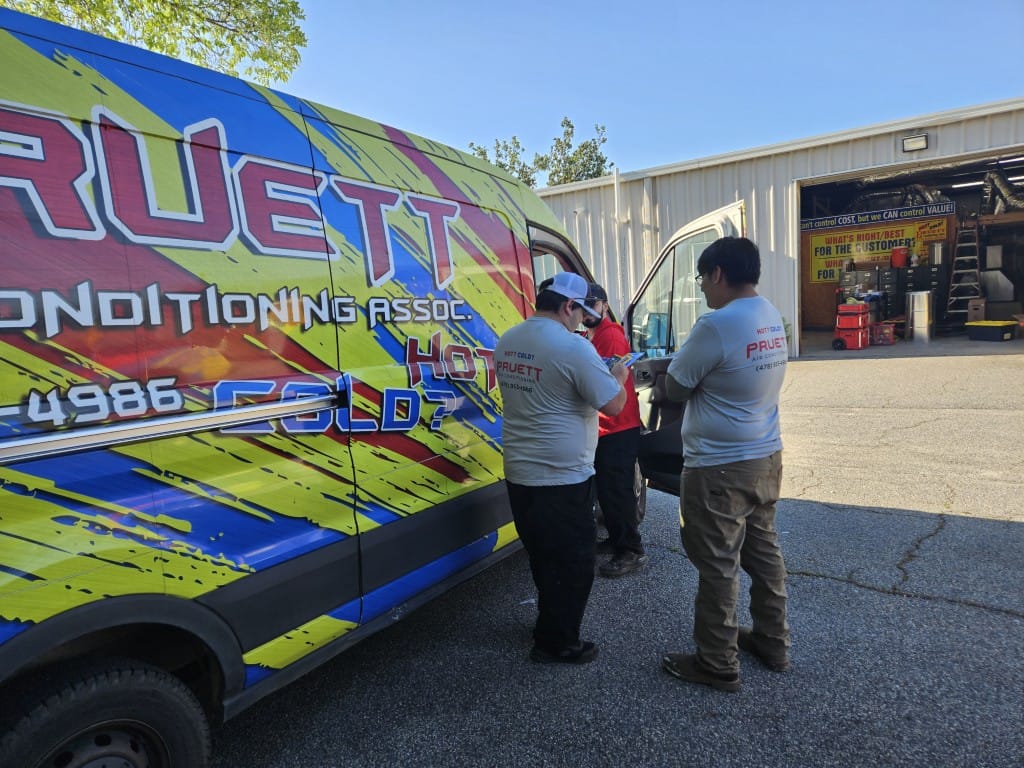
Pruett Air Conditioning has served Warner Robins, Eastman, and the towns around them since 1977. It’s family-owned, and you may already know the name from the “Hot? Cold? Call the Man!” ads.
If you’re new to the area, maybe you don’t. That’s okay. What matters for a new homeowner is simple: a local team that shows up, explains what it finds in plain words, and stands behind the work. Pruett backs its service with written guarantees, so you’re not left taking anyone’s word for it.
Need heat back fast? The team handles heating repair too. And if your detective work shows a furnace near the end of its life, you can talk through heating installation options and financing without pressure. Want to know who’s coming to your door? Meet the team before you book.
Frequently Asked Questions
What should I do first if I bought a house with no furnace service records?
Change the air filter, test your carbon monoxide detectors, and check the furnace for a data plate and service stickers. Then schedule a full professional inspection before heavy use. That first visit sets a safety baseline and becomes record number one in your new service history.
How long does a furnace maintenance visit take?
A routine tune-up usually takes about an hour. A first visit on a furnace with unknown history may take a bit longer, because the technician is checking safety items more closely and learning the system from scratch.
Is furnace maintenance worth it in a mild climate like Georgia?
Yes. Furnaces here sit idle for most of the year, which lets dust, debris, and pests build up. A yearly check catches those issues before the first cold night, helps the system run efficiently, and keeps the records many warranties expect.
Can a home inspection replace a furnace tune-up?
No. A home inspection is a quick visual check meant to flag obvious problems before a sale. It typically doesn’t include cleaning parts, testing gas pressure, or a detailed look at the heat exchanger. Treat the inspection report as a clue, not a clean bill of health.
Start Your Furnace’s New Story This Fall
You can’t change what the last owner did or didn’t do. But you can decide what happens from here.
Do a little detective work. Swap that filter. Test your detectors. Then get a full first-time furnace maintenance visit so you know exactly what you’re working with, and start a record you’ll be glad to have years from now.
Ready to stop guessing? Request service online or call Pruett Air Conditioning at 478-953-4986 in Warner Robins or 478-374-1481 in Eastman. Hot? Cold? Call the Man. You’ll get answers, in writing, before winter shows up.