The Furnace Quit. Your Budget Didn’t Plan for This.
It’s the first real cold snap of the season. You flip on the heat, and nothing happens, or worse, you hear a click, a hum, and then silence.
If you live on Social Security, a pension, or savings, that silence hits your wallet before it hits your toes. You can’t pick up extra shifts. You can’t “just put it on the card” without worrying about next month. So the big question isn’t only what’s wrong. It’s what’s this going to cost me?
Here’s the good news. Most furnace repair bills are smaller than people fear, and a few simple habits keep them from ballooning. This guide covers what repairs typically cost, which questions protect you from surprise charges, and how to decide between fixing and replacing. Pruett Air Conditioning has helped Middle Georgia families sort this out since 1977, so we’ll also share what to expect when you call.
What Furnace Repair Really Costs (And Why the Range Is So Wide)
Nobody enjoys a vague answer. But “it depends” is honest here, so let’s break down what it depends on.
National cost guides put the average furnace repair at roughly $300 to $350, with most jobs landing between about $130 and $500. That’s the middle of the pack. Your actual bill moves up or down based on a few things.
The bill has three parts
First comes the service call or diagnostic fee. Many companies charge somewhere between $75 and $200 just to show up and find the problem. Some apply that fee toward the repair if you go ahead, so ask.
Second is the part itself. A flame sensor is cheap. A blower motor is not.
Third is labor, and when the work happens matters. A repair at 2 p.m. on a Tuesday can cost noticeably less than the same fix at 9 p.m. on a Sunday, because after-hours rates run higher. That’s one reason a furnace that dies on a weekend can hurt more than one that dies on a weekday.
Ballpark prices by problem
Think of this table as a rough map, not a quote. Prices come from national averages, so local rates will differ.
| Common Problem | Typical Ballpark | What It Means for Your Budget |
|---|---|---|
| Dirty or failed flame sensor | Low (often under $200) | Usually a quick, same-day fix |
| Bad ignitor (furnace won’t light) | About $100–$350 | Worth repairing on almost any furnace |
| Failed thermostat | Often under $300 | Cheap fix, but confirm it’s really the thermostat first |
| Blower motor | About $250–$900 | Gets pricey; furnace age now matters |
| Draft inducer motor | Mid-range, varies | On an older furnace, ask about replacing instead |
| Cracked heat exchanger | Well into four figures | Often a replace-it conversation, and a safety issue |
Notice the pattern? The first three are the “breathe easy” repairs. The last three deserve a pause and a second look at your furnace’s age.
Five Questions That Keep a Repair Bill Honest
You shouldn’t need an HVAC degree to protect yourself. You just need to ask. Any good company will welcome these.
“Will you give me the price in writing before you start?” A written estimate means no moving target. If the tech finds something else once the panel is open, you get a call before any extra work begins.
“Does the service fee go toward the repair?” Policies vary. Knowing up front avoids that sinking feeling at the end of the visit.
“Is this repair urgent, or can it wait for regular hours?” Here’s the exception worth knowing: if the problem involves a possible gas or carbon monoxide issue, don’t wait. Shut the system off and call right away. But if you have a backup heat source and the fix is routine, a daytime visit may cost less.
“What happens if the same part fails again?” Ask about the warranty on parts and labor. Pruett backs its work with written promises you can read on the Our Guarantees page before you ever pick up the phone.
“Can you show me the failed part?” Honest techs are happy to. Seeing a burned-out ignitor with your own eyes feels a whole lot better than taking someone’s word for it.
Sound like a lot? It really isn’t. It’s four or five sentences on the phone, and it can save you hundreds.

Fix It or Replace It? The $5,000 Rule
This is where people get stuck, and it’s the part most articles skip. Here’s a simple trick HVAC pros use.
Multiply the repair cost by the furnace’s age in years. If the answer tops $5,000, replacement usually makes more sense. If it stays under, repair is usually the smarter money move.
Let’s run some numbers. Say your furnace is 8 years old and needs a $300 repair. That’s $2,400, so fix it and move on. Now say your furnace is 15 years old and needs a $450 blower motor. That’s $6,750, and you’re likely pouring money into a system near the end of its life.
A new furnace can run anywhere from roughly $2,800 to $7,500 installed, with an average near $4,800. That’s a big number on a fixed income. So the rule isn’t about spending more. It’s about not spending $400 here, $500 there, and $600 next winter on a furnace that was going to fail anyway.
This doesn’t work perfectly if your furnace is only a few years old but suffers a rare, expensive failure, or if it’s 20 years old and needs a $100 part. Use the rule as a guide, not a verdict. A good technician will tell you honestly which side of the line you’re on. If replacement is on the table, our heating installation team can walk you through your options without pressure.
Why Middle Georgia Furnaces Fail Right When You Need Them
Here’s the thing about our climate. Your furnace sits idle for most of the year, then has to run flat-out on the first cold morning. Dust settles on parts. Ignitors go weak. Moisture from our humid summers can leave a little corrosion behind.
So the first cold snap becomes the test. Parts that were “almost fine” in March finally give out in November. That’s why so many furnace calls come in the same few cold days, and why waiting lists can get long.
The fix is boring but powerful: get the furnace checked before it’s cold. A tune-up catches a weak ignitor or a dirty sensor while it’s still a cheap, scheduled visit. It’s far less stressful than a 5 a.m. surprise.
Cold already here? It’s not too late. Even a mid-season checkup can spot trouble before it turns into a no-heat emergency. And while you’re at it, make sure you have working carbon monoxide detectors on every floor. It’s a small purchase with a huge payoff, especially if a cracked heat exchanger is ever in the picture.
Spreading Out the Pain: Budget Moves for Fixed Incomes
Money stress is real, and you might feel embarrassed to ask about it. Please don’t. Asking is smart, and a good company expects it.
Start with the yearly checkup. Pruett’s Customer Care Plan is built around regular maintenance, which is how you turn a possible $500 surprise into a predictable, planned visit.
Next, build a small “furnace fund.” Even $15 to $25 a month adds up to a cushion that makes a $300 repair feel like an inconvenience instead of a crisis. Think of it as paying yourself first.
Finally, look at the money options before you need them. Pruett lists financing options and posts specials and promotions you can check anytime. If a bigger repair or a replacement does come up, knowing your choices ahead of time keeps you from deciding in a panic.
How Pruett Handles Furnace Repair
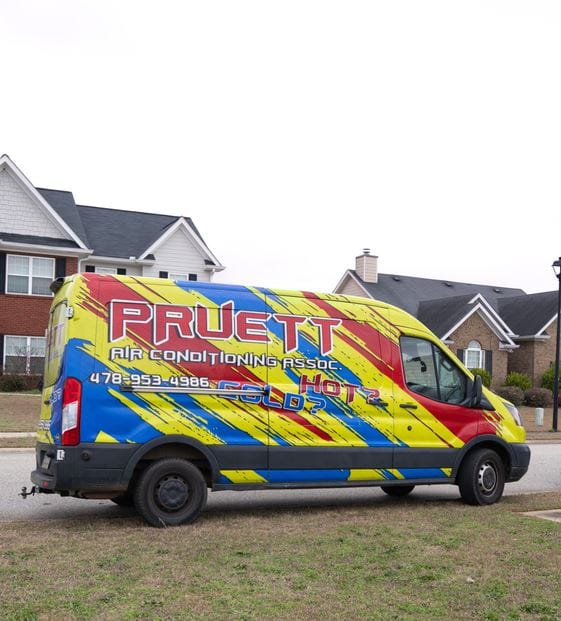
You’ve probably heard the jingle. Hot? Cold? Call the Man. But here’s what matters: the name only works if the service backs it up.
Pruett Air Conditioning is family-owned and has served Middle Georgia since 1977. Its technicians are NATE-certified, the company is a Carrier Factory Authorized Dealer, and the license number (#CN209475) is right on the website for anyone to verify. Pruett works on all brands, not just Carrier.
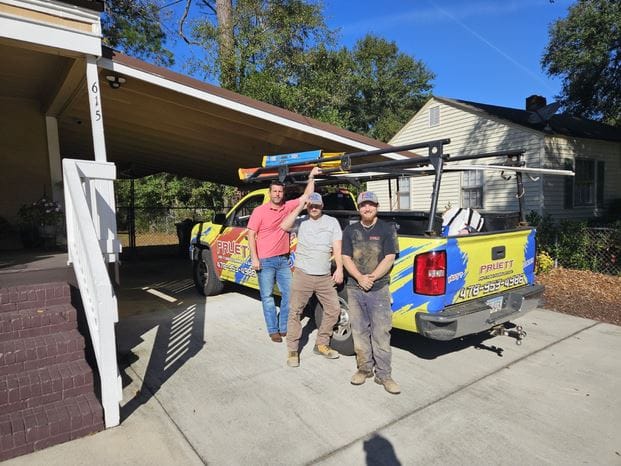
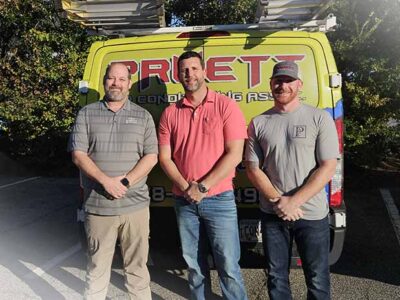
For you, that means a real local team with a Warner Robins office and an Eastman office, not a call center in another state. If you live out toward Eastman or the small towns around it, you aren’t an afterthought. You can see exactly what the team handles on the heating repair page, meet the people behind the trucks, and read the guarantees in plain language.
Think of it as home care, not just repair. The goal is to solve the problem in front of you and make sure the next one doesn’t sneak up on you. Pruett Air Conditioning puts promises in writing for exactly that reason: so there’s nothing to argue about later.
Frequently Asked Questions
How much should furnace repair cost?
Most repairs run between about $130 and $500, with an average around $300 to $350. Simple fixes like a flame sensor or ignitor sit at the low end. Blower motors and heat exchangers cost more. Ask for a written estimate before any work starts.
Is it worth repairing a 15-year-old furnace?
Sometimes. Multiply the repair cost by the furnace’s age. If the total is under about $5,000, repair usually makes sense. Above that, putting the money toward a new furnace often saves more over time.
Why does my furnace repair cost more at night or on weekends?
After-hours and weekend calls usually carry higher labor rates. If your situation is safe and you have another way to stay warm, scheduling a regular-hours visit can lower the bill. Never wait if you suspect a gas leak or carbon monoxide.
Does regular maintenance really lower furnace repair costs?
Yes, in most cases. A yearly tune-up catches weak parts early, when they’re cheap to swap. It also gives a technician a chance to warn you about an aging system before it quits in the middle of a cold night. You can learn more on the Pruett FAQs page.
Keep Your Warm House and Your Peace of Mind
Let’s wrap it up. Furnace repair doesn’t have to be a financial burden. Most fixes are modest, a few smart questions keep the bill honest, and the age-times-cost rule helps you decide whether to repair or replace.
Plan ahead where you can. Get the system checked before the cold hits, build a little furnace fund, and know your payment options. And when something does go wrong, call a local team that puts its promises in writing.
Ready for a clear price and no runaround? Request furnace service online, or call Warner Robins at 478-953-4986 or Eastman at 478-374-1481. You can also check which towns the team covers, from Warner Robins to Eastman.
Hot? Cold? Call the Man.