
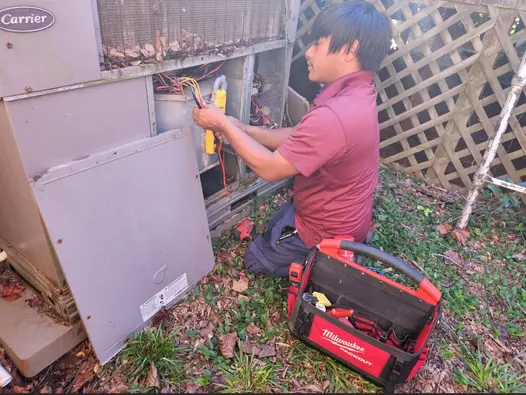
Is Your AC on Its Last Leg? Here’s How to Know
It’s July in Middle Georgia. The air is thick, the pavement is shimmering, and your air conditioning just made a noise it’s never made before.
Sound familiar?
Here’s the thing — every homeowner with an older system hits this moment eventually. The unit hums along for years, then one hot afternoon it starts short-cycling, blowing warm air, or just refusing to keep up. And suddenly you’re standing in your kitchen asking the big question: do I fix this thing, or is it finally time to replace it?
You’re not alone in this. Homeowners across Warner Robins, Eastman, and the surrounding counties face this exact decision every summer. The good news? You don’t have to guess. There’s a clear way to think through repair versus replace, and by the end of this guide, you’ll know exactly where your system stands.
Why This Decision Feels So Hard
Look, air conditioning repairs aren’t cheap. Neither is a full system replacement. That’s what makes this choice so stressful — you’re weighing a bill you can see today against a bill you might avoid tomorrow.
It’s frustrating when a technician gives you a number and you have no idea if it’s the smart move or a waste of money. You might feel overwhelmed by the whole thing, especially if this is your first time dealing with a major home system failure. That’s a normal reaction. Nobody teaches you this stuff in school.
But here’s what matters: there’s a pattern experienced technicians use to make this call, and once you understand it, the fog starts to clear.
The 50% Rule (And When It Doesn’t Apply)
Most HVAC professionals lean on a simple guideline called the 50% rule. If a repair costs more than 50% of what a new system would cost, replacement usually makes more financial sense. A $600 repair on a $6,000 system? Probably worth fixing. A $2,800 repair on that same system? That’s a different conversation.
This doesn’t work if your system is brand new and just needs a minor part. It also doesn’t apply if your unit is under warranty — in that case, repair almost always wins. The exception is when a homeowner has already sunk several repair bills into one unit over 18 months. At that point, the math shifts fast, even if any single repair looks affordable on its own.
Age Matters More Than You Think
Central air conditioners in Georgia’s climate typically last between 12 and 15 years. Our summers are brutal on equipment. Units run longer and harder here than they do in milder states, which shortens their working life.
If your system is pushing past that 12-year mark, age alone should factor heavily into your decision. Older units use older refrigerant, run less efficiently, and were built before today’s efficiency standards existed. Want to know the secret? Even a perfectly “working” 15-year-old unit is often costing you more in wasted electricity than a new one would cost in monthly payments.
Here’s a quick way to see how age lines up with typical outcomes.
| System Age | Typical Repair Outlook | General Recommendation |
|---|---|---|
| 0–5 years | Usually covered by warranty | Repair |
| 6–10 years | Repair costs still reasonable | Repair, unless costly compressor issue |
| 11–15 years | Efficiency dropping, repairs more frequent | Compare repair cost to 50% rule |
| 15+ years | Outdated refrigerant, high failure risk | Replace |
This table is a starting point, not gospel. A well-maintained 13-year-old unit can outperform a neglected 8-year-old one. That’s why a real inspection matters more than a birthday on a sticker.
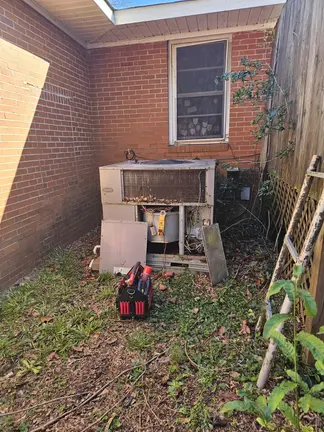
Signs Your System Is Trying to Tell You Something
Sometimes the unit doesn’t fail all at once. It sends warning signs first, and it’s easy to explain them away.
Rising energy bills, even when your usage habits haven’t changed, often point to a system working harder than it should. Uneven cooling — cold in the living room, muggy in the bedrooms — usually signals aging ductwork or a compressor that’s losing strength. Frequent repairs, especially two or more in a single cooling season, are a red flag most technicians take seriously.
Strange noises deserve attention too. A grinding, squealing, or banging sound isn’t your AC being dramatic. It’s usually a mechanical part wearing down, and ignoring it tends to turn a $300 fix into a $3,000 one.
What Repair Actually Solves — And What It Doesn’t
Repairs are great for isolated problems. A blown capacitor, a dirty condenser coil, a refrigerant leak in a younger system — these are fixable issues with a clear cause and a clear fix.
But repair doesn’t solve efficiency. It doesn’t lower your power bill. And it definitely doesn’t buy you peace of mind if the rest of the unit is aging right alongside the part that just failed. Fixing one component on a 14-year-old system is a little like patching one bald tire — technically it works, but you know what’s coming next.
What Replacement Actually Gives You
A new system isn’t just about avoiding breakdowns. Today’s units are dramatically more efficient than models built even a decade ago, which means real, ongoing savings on your utility bill.
There’s also something less tangible but just as real: relief. Not wondering every August whether this is the summer it finally gives out. That kind of peace of mind is hard to put a price on, but homeowners who’ve made the switch will tell you it’s worth a lot.
Why Who You Call Matters as Much as What You Decide
Here’s the part a lot of guides skip. The repair-versus-replace decision isn’t just about age and cost — it’s about trusting the person giving you the diagnosis.
Pruett Air Conditioning has been serving Warner Robins and Eastman since 1977. That’s not a marketing line — it’s nearly five decades of technicians who live in this community, know how Middle Georgia summers punish equipment, and have serviced generations of the same families’ systems. As a Carrier Factory Authorized Dealer with NATE and EPA certified technicians, Pruett brings the kind of quiet expertise that shows up in the work, not just the sales pitch.
That matters here because an honest technician will tell you when repair still makes sense — not just push a new system because it’s the bigger sale. If your unit is a good candidate for maintenance rather than replacement, a program like the Customer Care Plan can extend its life and catch small issues before they become expensive ones. And if replacement is genuinely the right call, Pruett’s residential AC services walk you through options without the pressure.
For homeowners in the Eastman area with fewer local options, that kind of straight talk carries even more weight. You want the technician who shows up — not a stranger reading from a script.
Making the Call With Confidence
Look, there’s no single rule that fits every situation. But if you combine the 50% rule, your system’s age, and the pattern of recent repairs, you’ll land on the right answer far more often than guessing ever could.
If your AC is under 10 years old and this is its first real issue, repair it. If it’s over 12 years old, has needed multiple repairs recently, or the estimate creeps close to half the cost of a new system, it’s time to start planning for replacement — on your terms, not in the middle of a 98-degree emergency.
Frequently Asked Questions
How long does a typical AC unit last in Middle Georgia’s climate? Most systems last 12 to 15 years here, a bit shorter than the national average because of how hard Georgia summers push the equipment.
Is it cheaper to repair or replace an AC unit? Repair is usually cheaper upfront, but frequent repairs on an aging system often cost more over time than one upfront replacement, especially once you factor in wasted energy.
Can I wait until my AC completely breaks down before replacing it? You can, but it’s risky. Waiting means you’re likely making a rushed decision during peak summer demand, when scheduling and pricing are both tighter.
Does regular maintenance really extend the life of an AC system? Yes. Routine maintenance catches small problems early and keeps components running efficiently, which is exactly why programs like a seasonal care plan pay for themselves over time.
The Bottom Line on Repair vs. Replace
Deciding between repair and replace isn’t about guessing — it’s about looking at your system’s age, its repair history, and the honest cost comparison in front of you. Middle Georgia summers don’t leave much room for error, so getting this decision right the first time matters.
If your air conditioning has you stuck between fixing it one more time or finally moving on, don’t sweat it alone. Reach out to a technician who’ll give you a straight answer, not just a sales pitch — because in the end, that’s what keeps a family cool for the next generation, too.