The Cold Monday Morning Every Owner Dreads
It’s 7:45 a.m. on the first real cold snap of the year. You unlock the front door, and the air inside feels like a walk-in cooler. Your first customer shows up in 15 minutes. Your staff is already texting about bringing space heaters.
Sound familiar?
Here’s the thing. A furnace rarely dies out of nowhere. It usually gives warning signs for weeks, but nobody’s looking. Then the first 35-degree morning in Middle Georgia puts it under real load, and whatever was weak finally breaks.
For a homeowner, that’s a miserable day. For a small business owner, it’s lost sales, unhappy workers, and customers who walk out early. This guide covers what furnace maintenance really does for a business, what a good tune-up checks, how to schedule it so it never costs you a work hour, and when maintenance isn’t the right answer anymore.

Why a Broken Furnace Hurts a Business More Than a Home
At home, you can grab a blanket and wait for the tech. At work, you can’t.
Think about who’s in your building. A hair salon has clients sitting still for an hour or more. A dental office has patients in thin paper bibs. A retail shop has shoppers who will simply leave and buy online. A restaurant can’t keep hands steady on a line when the dining room is 58 degrees.
The costs you see and the ones you don’t
The repair bill is the cost everyone notices. But it’s often the smallest one.
The bigger hit is quiet. It’s the customer who cuts a visit short and never mentions why. It’s the employee who goes home “not feeling great.” And it’s the online review that says the place felt cold and run-down. You might feel frustrated reading that, because you know the real story. Still, customers only remember how the visit felt.
There’s also the price of timing. A furnace that fails during a cold snap fails at the same time as everyone else’s. Every HVAC company in Warner Robins and Macon gets slammed that week. Planned maintenance happens on your calendar. Emergency repair happens on the weather’s.
What Furnace Maintenance Actually Checks
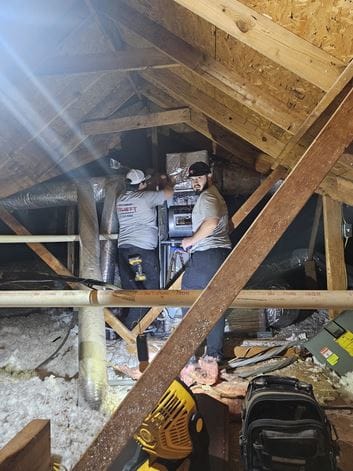
A real tune-up is not a tech glancing at the unit and swapping a filter. It’s a hands-on inspection of the parts most likely to fail when the heat kicks on.
Many small businesses in Middle Georgia run gas heat through a rooftop unit or a split system in a back room or attic. Others use heat pumps. The details change by system, but the goal is the same: find the weak part before it quits.
The table that explains the whole case
Here’s what a fall check looks at, what tends to go wrong, and what that failure looks like during business hours.
| What Gets Checked | What Goes Wrong Without Maintenance | What It Looks Like on a Workday |
|---|---|---|
| Air filter | Clogs with dust and lint | System overheats and shuts itself off by mid-morning |
| Flame sensor | Gets coated with buildup | Burners light, then cut out over and over |
| Igniter | Cracks or weakens with age | Furnace won’t start on the first cold morning |
| Heat exchanger | Can crack from years of heating and cooling | Unit gets shut down for safety; possible carbon monoxide risk |
| Blower motor and belt | Wears, squeals, or seizes | Loud noise in the sales area, then no airflow |
| Electrical connections | Loosen and corrode | Random shutdowns that are hard to trace |
| Thermostat settings | Wrong schedule or dead batteries | Building is cold at opening because heat never came on |
| Condensate drain (high-efficiency units) | Clogs with algae or debris | Safety switch trips, and the heat stops |
Look at that last column. Almost every problem shows up as “the heat stopped at a bad time.” That’s the whole point of maintenance. It moves the failure from Tuesday at 10 a.m. to a planned visit where the part simply gets fixed.
The safety piece nobody wants to think about
A cracked heat exchanger is the one problem on that list that goes beyond comfort. It can let carbon monoxide into the air your staff and customers breathe. That’s why a trained tech checks it every year, and why every business with gas heat should have working CO detectors.
It isn’t meant to scare you. It’s just part of being responsible for a building full of people.
Timing Is the Secret Most Owners Miss
Want to know the secret? It’s not just whether you do furnace maintenance. It’s when.
Book it before the first cold snap
In Middle Georgia, the heat often sits unused from April to November. Parts dry out. Dust settles. Then one chilly week arrives, and every system in the county switches on at once.
Scheduling your tune-up in September or October means you’re ahead of that rush. You get your pick of appointment times. And if the tech finds a worn part, there’s time to order it before you need heat.
Schedule it around your hours, not in the middle of them
Here’s what matters for a business: the tune-up should never cost you a sale. Ask for the first appointment of the morning or a time when your shop is slow. Pruett Air Conditioning books service Monday through Friday from 7 a.m. to 7 p.m. and Saturdays from 7 a.m. to 5 p.m., so many owners can get it done before opening or on a weekend day.
Watch out for the “Monday morning” problem
Lots of businesses turn the heat way down over the weekend. That’s smart for your power bill. But it also means the furnace has to work its hardest first thing Monday, right when you open.
If anything is weak, that’s when it fails. A tune-up, plus a properly programmed thermostat that starts warming the building an hour or two before opening, takes most of the sting out of that risk.
Small Signs Your Furnace Is Asking for Help
Your furnace talks. You just have to know what it’s saying.
A dusty burning smell on the first day of heat is normal for a few minutes. If it lasts all day, call. A furnace that clicks on and off every few minutes is short cycling, often from a dirty sensor or filter. Rooms that are warm up front but cold in the back point to airflow or duct problems. Rising gas or power bills with no change in your hours mean the system is working harder than it should.
And if your staff keeps sneaking the thermostat up? That’s a clue too. People rarely complain directly. They just adjust.
None of these mean the furnace will fail tomorrow. But each one is cheaper to fix in October than in January.
When Maintenance Isn’t Enough
Let’s be honest here, because not every furnace can be saved by a tune-up.
This doesn’t work if your system is already near the end of its life. Many furnaces and heat pumps start costing more in repairs once they pass the 15-year mark. If you’ve had two or three repair calls in the last couple of seasons, maintenance becomes a bandage, not a fix.
The exception is a well-cared-for older unit that still runs clean and safe. Some keep going for years. A good tech will tell you plainly which one you have and won’t push a new system you don’t need.
Comparing your options without the pressure
If replacement does come up, it helps to know you have choices. Pruett Air Conditioning offers heating installation on Carrier and other equipment, plus financing options that can spread the cost across months instead of one large check during a slow season.
It’s also worth reading the fine print on any company’s promises before you sign. Pruett lists its written guarantees on its website, including its 10-year No Lemon guarantee on new systems. Ask any contractor you’re considering to put their promises in writing too. If they won’t, that tells you something.
How a Maintenance Plan Takes This Off Your Plate
You already juggle payroll, inventory, staffing, and taxes. Remembering to call about the furnace every fall probably isn’t at the top of your list.
That’s where a plan helps. With Pruett’s Customer Care Plan, your heating and cooling systems get checked on a regular schedule, so you aren’t the one tracking dates. A spring visit covers cooling before Georgia’s brutal summer. A fall visit covers heating before the first freeze.
For a business owner, the real value isn’t just the checklist. It’s relief. One less thing to forget. One less 7:45 a.m. surprise.
Why local experience matters here
Middle Georgia buildings have their own quirks. Older downtown storefronts in Perry and Macon often have aging ductwork. Strip centers along Russell Parkway may share rooftop units with odd setups. Rural shops around Eastman and Dodge County can sit far from the nearest service office.
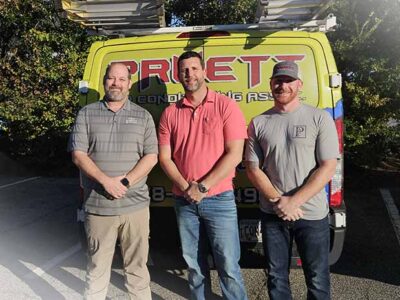
Pruett Air Conditioning has served this area since 1977, with offices in both Warner Robins and Eastman. That local presence matters when you need a tech who knows the region’s buildings and doesn’t have to drive in from Atlanta. Pruett’s commercial services also cover boilers, which many older business buildings still rely on.
Frequently Asked Questions
How often does a small business need furnace maintenance?
Plan on at least once a year, ideally in early fall before the first cold snap. Businesses with long hours, heavy foot traffic, or dusty work like salons, restaurants, and repair shops may benefit from more frequent filter changes between visits. Pairing a fall heating visit with a spring cooling visit covers the whole year.
Can I just change the filter myself and skip the tune-up?
Changing the filter is a great habit, and you should do it. But a filter won’t tell you if the flame sensor is coated, the igniter is cracking, or the heat exchanger has a flaw. Those are the parts that cause surprise shutdowns, and they need a trained tech with the right tools to inspect safely.
Will furnace maintenance disrupt my business?
It shouldn’t. Most tune-ups take about an hour per system, and the heat is off only part of that time. Book the first slot of the day, a slow afternoon, or a Saturday, and your customers likely won’t notice anyone was there.
Does maintenance really prevent breakdowns, or just delay them?
It catches the most common causes of failure early, like dirty sensors, weak igniters, loose wiring, and clogged drains. No one can promise a furnace will never break. But fixing a $50-to-$200 part on a planned visit is far better than an emergency call during the busiest week of winter, when every HVAC company is booked.
Stay Warm, Stay Open, Stay Ahead
Here’s the short version. A furnace that fails during business hours costs you more than a repair bill. It costs comfort, sales, and trust. Most of those failures start as small problems a fall tune-up would catch.
So book your check before the cold arrives. Schedule it around your hours. Program your thermostat to warm the building before you open. And if your system is getting old, get an honest opinion before it makes the choice for you.
Look, you have enough to manage. Let the heat be the one thing you don’t have to think about this winter. Request service online or call Warner Robins at 478-953-4986 or Eastman at 478-374-1481.
Hot? Cold? Call the Man.