
How Retirees Can Avoid a Costly AC Surprise
The $6,000 Problem Nobody Plans For
You worked hard your whole life. You’ve got a budget, you stick to it, and you don’t like surprises.
Then your air conditioning quits in the middle of a Middle Georgia summer — and suddenly you’re looking at a repair bill that blows up everything you planned for the month.
It’s not fair. But it happens to retired homeowners all the time, and the worst part is that most of it is preventable. This article is going to show you exactly how to protect yourself, what to watch for, and how to make smart decisions about your AC system so you stay comfortable without breaking the bank.
Why Retired Homeowners Get Hit the Hardest
Look, everyone hates a surprise repair bill. But when you’re on a fixed income, it hits differently.
There’s no “I’ll just pick up extra hours.” There’s no big bonus coming at the end of the quarter. What you have is what you have — and an $800 repair or a $5,000 replacement can genuinely derail your finances for months.
The other piece that doesn’t get talked about enough? Health. For older adults, a home without working air conditioning during Georgia’s heat season isn’t just uncomfortable. Heat-related illness is a real risk, especially when temperatures push into the upper 90s for days at a time.
This isn’t just about money. It’s about safety.
The Truth About Aging AC Systems
Here’s the thing most people don’t want to hear: AC systems don’t last forever, and they don’t usually fail all at once. They decline gradually, getting less efficient and more fragile over time — until one day, under peak load, something gives out.
In Middle Georgia’s climate, a system worked hard for 12 to 15 years has done a lot of work. Hot, humid summers. Units running nearly around the clock from May through September. That takes a toll.
The trap retired homeowners fall into is this: the system still runs, so they assume it’s fine. But running and fine aren’t the same thing. A system that’s limping along at 60% efficiency is costing you money on your electric bill every single month — and building toward a failure.
What “Declining Efficiency” Actually Costs You
This is where it gets real. An aging, inefficient air conditioning system doesn’t just risk breaking down. It quietly drains your wallet the entire time it’s operating.
A system that should be moving you toward comfortable air at a cost of $120 a month might instead be running $170 or $190 because it’s working twice as hard to do the same job. Over a summer, that’s $200 to $400 in extra electric costs — money that disappears without a single repair happening.
Sometimes replacing an old, inefficient system actually saves money on a monthly basis. That’s a conversation worth having.
Your Best Defense: Stop Surprises Before They Start
The single most important thing you can do is get a professional tune-up every spring, before the heat season hits.
That’s not a sales pitch. It’s just math.
A tune-up costs somewhere in the range of $75 to $150 depending on what’s included. During that visit, a certified technician checks refrigerant levels, inspects electrical components, cleans the coil, and identifies parts that are wearing out. Finding a failing capacitor in April — before it quits on a 98°F August afternoon — costs a fraction of what an emergency call costs.
The exception is this: a tune-up only protects you if the system is otherwise fundamentally sound. If a technician tells you the system is in poor overall condition, that’s important information — not a reason to panic, but a reason to plan.
What to Do When a Repair Is Recommended
Get the details. Ask exactly what’s failing, what it will cost, and how it affects the overall life of the system.
Here’s a rough rule of thumb that HVAC professionals use: multiply the repair cost by the system’s age. If that number exceeds $5,000, replacement is usually the smarter long-term move. A $400 capacitor on a 12-year-old system is a reasonable repair. A $1,800 coil on a 16-year-old system that’s already been repaired twice? That’s money that might be better put toward something new.
It’s frustrating to hear that. But making a clear-eyed decision now beats being forced into an emergency replacement later.
How to Think About Replacement Without Panicking
A new air conditioning system is a significant investment. No question. But there are ways to approach it that make it manageable.
Financing options exist. Pruett Air Conditioning offers financing through their work as a Carrier Factory Authorized Dealer, which means access to manufacturer programs with reasonable terms. Replacing a system doesn’t necessarily mean writing a check for $6,000 all at once.
Rebates are real. Carrier and utility companies frequently offer rebates on high-efficiency equipment. A NATE-certified technician can walk you through what’s currently available and what you’d qualify for. These rebates sometimes amount to several hundred dollars off the total cost.
Timing matters. If your system is aging but still functional, replacing it in the fall or spring — off-season — often gets you better pricing and faster scheduling than an emergency replacement in the middle of July.
Comparing Your Options: Repair vs. Replace
| Scenario | Recommended Action | Why |
|---|---|---|
| System under 10 years, minor repair needed | Repair | System has remaining life; repair is worthwhile |
| System 10–13 years, moderate repair needed | Evaluate carefully | Depends on condition and repair cost |
| System 13+ years, major repair needed | Lean toward replacement | Repair cost unlikely to be recovered |
| System any age, uses R-22 refrigerant | Plan for replacement | R-22 no longer manufactured; recharging costly |
| System any age, bills spiking noticeably | Get an efficiency evaluation | May be losing money monthly to inefficiency |
| System recently maintained, no issues | Annual tune-up and monitor | Prevention is the lowest-cost strategy |
What Pruett Has Done for Middle Georgia Families for Nearly 50 Years
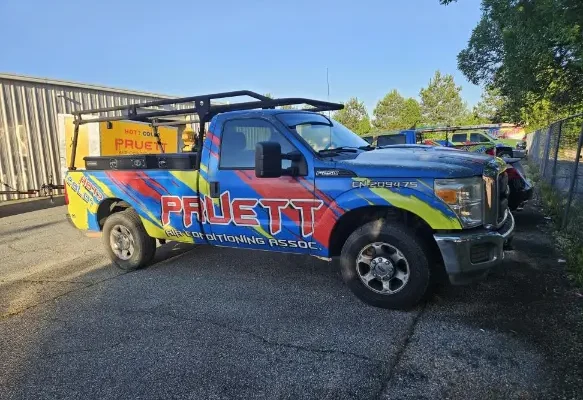
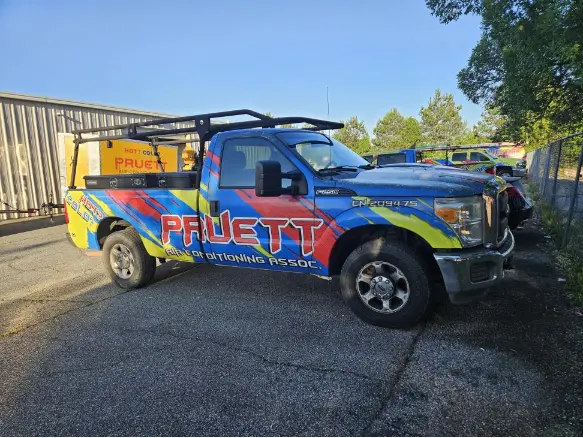
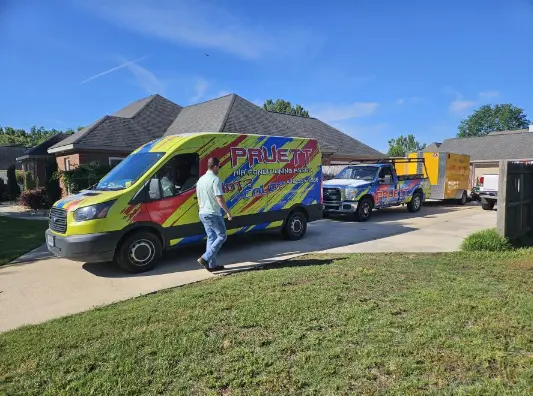
Pruett Air Conditioning has been in Warner Robins and Eastman since 1977. That’s not just a number — that’s nearly 50 years of showing up for families across Middle Georgia, including a lot of retired homeowners who’ve been customers for decades.
NATE-certified technicians. EPA certified. Carrier Factory Authorized Dealer. Those credentials mean Pruett meets a standard most local operators don’t.
But what longtime customers tend to mention isn’t the certifications. It’s that Pruett gives them straight answers. When a repair makes sense, they say so. When it doesn’t, they say that too.
That kind of honesty matters a lot when you’re on a fixed income and trying to make a smart decision.
Frequently Asked Questions
How can I tell if my AC is losing efficiency before it breaks down completely?
Watch your electric bill. If your cooling costs have crept up 15–25% compared to a couple of summers ago and your usage habits haven’t changed, the system is likely working harder than it should. Also pay attention to how long the system runs — if it runs nearly nonstop on a hot day and the house still doesn’t reach your set temperature, that’s an efficiency problem, not just a capacity one.
Are there programs that help seniors with AC replacement costs?
Yes, several exist. Georgia’s weatherization assistance programs and utility company rebates can offset some replacement costs. Carrier and other manufacturers also run seasonal rebate programs on qualifying high-efficiency equipment. A Carrier Factory Authorized Dealer like Pruett can help identify what’s currently available and what you’d qualify for based on the equipment you choose.
Is a maintenance agreement worth it on a fixed income?
For most retired homeowners, yes — and here’s why. A maintenance agreement that includes an annual tune-up and priority service pricing typically runs $100 to $200 per year. In exchange, you get a technician checking your system every spring, catching problems before they fail, and often a discount on any repairs needed. The math usually works in your favor, and more importantly, it removes a lot of the anxiety around “what if something goes wrong.”
What should I ask a technician before agreeing to a major repair?
Ask three things: What exactly is failing? What’s the total repair cost including labor and parts? And given the system’s age and current condition, what’s a realistic assessment of how many more years it’ll perform reliably? A trustworthy technician will answer all three honestly. If someone pressures you toward a decision without giving you those details, that’s a sign to get a second opinion.
Peace of Mind Is Worth Planning For
Here’s the bottom line.
An AC breakdown in the middle of a Georgia summer is stressful for anyone. When you’re retired and working with a set budget, it can feel genuinely overwhelming. But most of the worst outcomes — the emergency calls, the rushed decisions, the surprise five-figure bills — are avoidable with a little planning.
Get the annual tune-up. Know your system’s age. Have a real conversation with a technician you trust about where things stand. And if replacement is coming, plan it on your timeline, not the system’s.
Pruett Air Conditioning has been the neighbor Middle Georgia calls for nearly half a century. Straight answers, honest pricing, and a team that understands what reliability means to the people they serve. Give them a call — before the summer makes it urgent.