
Is Your AC Ready for Georgia’s Worst Heat?
When the Heat Hits Hard, There’s No Room for Guessing
It’s July. The thermometer reads 97°F. You walk inside expecting cool air — and get nothing but a warm, stale blast from the vents.
Sound familiar?
For a lot of Middle Georgia homeowners, that moment of dread isn’t hypothetical. It happens every summer. And if your air conditioning system is pushing 10, 15, or even 20 years old, the question isn’t if it’ll struggle — it’s when.
Here’s the thing: most AC breakdowns don’t come out of nowhere. There are signs. And knowing what to look for could be the difference between a quick service call and a full emergency replacement in the dead of summer.
This article walks you through exactly what to watch for, what it means, and when it’s time to stop hoping and start acting.

The Middle Georgia Heat Is Different — And Your AC Knows It
Warner Robins. Eastman. Cochran. The summers here aren’t just hot — they’re relentless. Weeks of 90°F+ days with humidity that makes the air feel like a wet blanket. That’s not a minor stress test for your HVAC system. That’s an endurance event.
Your air conditioner is designed to handle a load. But an aging system running nonstop for days on end? That’s where things start to crack.
The harder your AC works to keep up, the faster worn-out parts fail. A capacitor that’s been on the edge for two years might hold on through a mild spring — and then quit completely on the hottest day of August.
That’s just physics.
Warning Signs Your AC Is About to Fail
It’s Running Constantly but Not Cooling
Your system should cycle on and off throughout the day. If it’s running nonstop and your house still feels muggy and warm, that’s a red flag.
It could be low refrigerant. A dirty coil. A failing compressor. None of those fix themselves — and all of them get worse the longer you wait.
You’re Seeing Higher Electric Bills
Look, nobody’s electric bill is cheap in July. But if yours has jumped noticeably compared to last summer — and your usage habits haven’t changed — your AC is working harder than it should be.
Aging systems lose efficiency. What used to cost you $180 a month might now cost $240, and the system is still struggling. You’re paying more for less comfort.
Strange Noises You Didn’t Used to Hear
Banging, rattling, squealing, or grinding sounds aren’t “normal AC noise.” They’re your system telling you something is wrong.
A rattling could be a loose part. A grinding could be a bearing going out. These don’t disappear on their own — and ignoring them usually turns a $300 repair into a $1,500 one.
It’s Struggling to Keep Up After 3 PM
Here’s a pattern worth knowing: a lot of aging systems can handle the morning load just fine. Then the afternoon hits — when the sun is at its peak, the attic hits 130°F, and outdoor temps push into the mid-90s — and the system just can’t keep up.
Your thermostat’s set to 74°F. Your house is sitting at 80°F. And it’s not going down.
That’s a capacity problem, and it tends to get worse every season.
How Old Is Too Old? A Quick Reference
Here’s a straightforward breakdown of what age typically means for an AC system in a Georgia climate:
| System Age | What to Expect | Recommended Action |
|---|---|---|
| Under 8 years | Should be running efficiently | Annual tune-up; monitor performance |
| 8–12 years | Efficiency declining; repairs more common | Schedule a full system evaluation |
| 12–15 years | Nearing end of useful life in hot climates | Budget for replacement; don’t ignore issues |
| 15+ years | High breakdown risk; major components may fail | Strongly consider proactive replacement |
| Any age with R-22 refrigerant | Refrigerant is no longer manufactured | Plan replacement; repairs will be costly |
The exception is a well-maintained system with a clean service history. Routine maintenance extends system life. A system that’s been tuned up every year by a qualified technician will outperform a neglected one of the same age — sometimes by years.
What Actually Happens When Your AC Breaks Down in Peak Summer
You might feel overwhelmed just thinking about it. And honestly, that reaction makes sense.
An emergency HVAC call in July is stressful, expensive, and — if you’re elderly, have young kids, or have health conditions — genuinely dangerous. Middle Georgia summers have seen heat indexes above 110°F. That’s not discomfort. That’s a health risk.
The other reality? Parts can be backordered. Equipment availability tightens up fast in peak season. What might be a two-day repair in April can become a five-day wait in August.
This is exactly why getting ahead of the problem matters. A lot.
What Pruett Air Conditioning Recommends
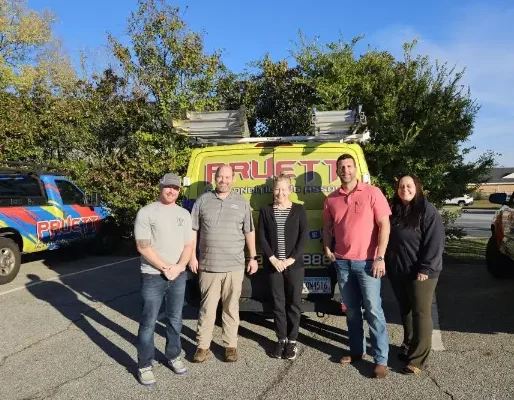
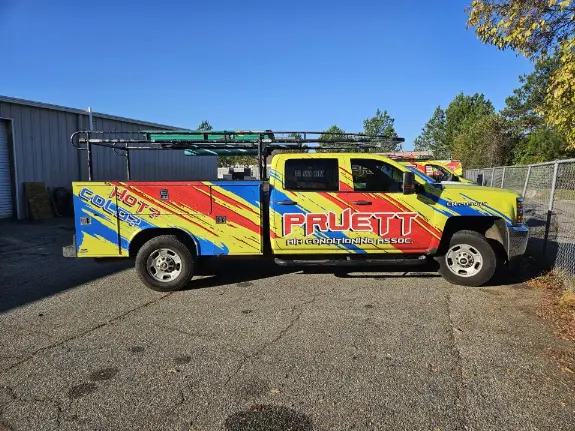
Pruett has been keeping Middle Georgia families cool since 1977. Nearly 50 years of Georgia summers. That’s not a marketing line — that’s what it looks like when a business actually knows what it’s doing in a specific climate, for a specific community.
As a Carrier Factory Authorized Dealer, Pruett has access to priority parts, certified training, and equipment that meets a higher standard than what most local operators can offer. NATE-certified technicians. EPA certified. The credentials exist — but more importantly, the track record exists.
Here’s what Pruett recommends for homeowners with systems 10 years or older:
- Get a full system evaluation before summer peaks: Don’t wait for a breakdown. A trained technician can identify refrigerant issues, worn capacitors, coil problems, and airflow restrictions — all things that compound in extreme heat.
- Ask about efficiency ratings on replacement systems: A new high-efficiency Carrier system won’t just be more reliable. It’ll cut your monthly energy costs meaningfully. In Georgia’s climate, that adds up fast.
- Ask about financing options: A new system is a significant investment. Pruett offers options that make it easier to replace an aging system on your timeline — not in a panic.
Frequently Asked Questions
How do I know if my AC just needs a repair or a full replacement?
The general rule of thumb is the “5,000 rule” — multiply the repair cost by the system’s age. If that number exceeds $5,000, replacement is usually the smarter financial choice. A Pruett technician can give you an honest assessment based on the specific condition of your system, not a one-size-fits-all answer.
What’s the most common reason AC systems fail suddenly in summer?
Capacitor failure is one of the most frequent culprits. Capacitors help start and run the motors in your AC system, and they degrade with heat and age. They can fail without any warning. The good news is they’re a relatively inexpensive repair — if you catch them before they take out the compressor with them.
Is it worth repairing an older system that still “mostly” works?
It depends on how old and what’s failing. If a 14-year-old system needs a compressor replacement, you’re looking at spending $1,500–$2,500 on a system that’s already past its expected lifespan in a hot climate. That money almost always makes more sense applied toward a new system with a warranty, better efficiency, and a decade of reliable life ahead of it.
How often should I have my AC serviced if I live in Middle Georgia?
Once a year at minimum — ideally in the spring before the heat season hits. In a climate as demanding as Central Georgia’s, annual maintenance isn’t optional if you want your system to last. It’s what keeps a 10-year-old system running when it needs to.
Don’t Wait for the 97°F Wake-Up Call
Here’s what it comes down to.
An aging air conditioning system in Middle Georgia isn’t just an inconvenience waiting to happen. It’s a real risk — to your comfort, your family, and your wallet. The summers here are unforgiving, and they don’t care whether your compressor is having a bad day.
The homeowners who avoid the worst of it are the ones who act before there’s a crisis. Get the evaluation. Know what you’re working with. Make a plan.
Pruett Air Conditioning has been the neighbor Middle Georgia calls when it matters most — for nearly 50 years. If your system is aging, struggling, or just making you nervous, reach out to the team at Pruett before the heat makes the decision for you.