

Choosing a furnace filter might seem like a small detail, but it plays a big role in your home’s comfort, air quality, and energy efficiency. For homeowners in Warner Robins, Eastman, and across Central Georgia, the right filter can help your heating system run more smoothly while keeping dust, allergens, and debris out of your home.
With so many filter types, sizes, and ratings available, it’s easy to feel unsure about what your furnace actually needs. Using the wrong filter — or forgetting to replace it regularly — can restrict airflow, strain your system, and lead to higher energy bills or unnecessary repairs.
In this blog, the HVAC professionals at Pruett Air Conditioning will walk you through the basics of choosing the right furnace filter, explain what ratings really mean, and help you understand how to balance air quality with proper system performance for your home.
Let’s look at how to pick a furnace filter and why it’s important.
1. Choose the Right Filter Size
One of the most important factors to consider when choosing a furnace filter is size. Filters are generally measured by length, width, and depth (or thickness), which allow them to fit snugly into the furnace’s filter slot without being too tight or loose.
The easiest way to determine what size filter you need is to look at the old one. The size should be printed on the filter frame. Alternatively, you can measure the filter yourself, check for the recommended filter dimensions in the furnace’s owner manual, or contact the manufacturer for assistance.
The most common furnace filter sizes include 14 in x 25 in, 16 in x 20 in, 16 in x 25 in, 20 in x 25 in, and 25 in x 25 in. If you’re unable to determine the appropriate size filter for your equipment, contact an HVAC specialist for help. At Pruett, our Customer Care Plan makes it easy to keep up with air filter cleanings and replacements. Receive free filters twice a year, a 12-point tune-up twice a year, and many other preventative services.
2. Select an Appropriate MERV Rating
A minimum efficiency reporting value (MERV) rating determines the effectiveness of an air filter. The higher the MERV rating, the better equipped the filter is at trapping tiny particles in the air. Filter MERV ratings range from 1 to 20, with 1 being the least efficient and 20 being the most efficient.
While selecting a filter with a high MERV rating may seem like the best option, other aspects may influence your decision. For example, filters with high MERV ratings tend to have high densities, which will capture more particles from the air. This is great for your air quality but leads to the filter needing to be replaced more often, which can lead to increased costs.
When determining an appropriate MERV rating for your particular heating system, take time to check your system specifications. Most residential HVAC systems work best with filters that have a MERV rating between 8 and 13. Ultimately, the judgment call is yours, depending factors in your home and your preference for replacement schedule.
3. Compare Filter Types
When shopping for furnace filters, you’ll likely come across a variety of options. The type of filter you choose will play a direct role in its effectiveness. Some of the most common types of furnace filters include:
 Fiberglass Air Filters: Fiberglass filters are the most affordable option. However, they also have the lowest MERV rating, with a typical rating between 1 and 4. If having high air quality is a priority, fiberglass air filters may not be the best option for your home. They are better suited for homeowners who value energy efficiency and want to place the least restrictions on airflow.
- Washable Air Filters: As the name suggests, a washable filter can be cleaned and reused. Unlike a fiberglass filter that should be replaced monthly, washable air filters only need to be replaced every few years.
- Electrostatic Air Filters: When it comes to electrostatic air filters, homeowners have the option of both disposable and reusable options. The charged fibers in these filters work to effectively capture both small and large particles in the air. The larger surface area helps to capture more particles.
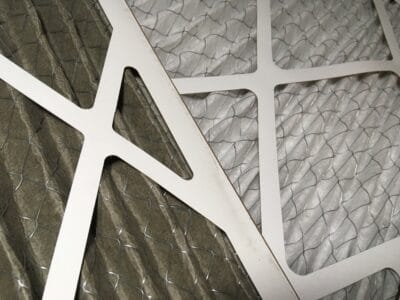 Fiberglass Air Filters: Fiberglass filters are the most affordable option. However, they also have the lowest MERV rating, with a typical rating between 1 and 4. If having high air quality is a priority, fiberglass air filters may not be the best option for your home. They are better suited for homeowners who value energy efficiency and want to place the least restrictions on airflow.
Another important decision you’ll need to make when comparing filter types is pleated or non-pleated. Pleated air filters tend to be the most efficient and typically last longer than their non-pleated counterparts. This is because pleated filters contain considerably more surface area which can trap pollutants and contaminants without disturbing air flow. Pleated filters are best suited for systems that require moderate to high MERV ratings.
You can trust the HVAC experts at Pruett Air Conditioning to help you determine the best type of air filter for your particular system and air quality needs.
4. Consider the Level of Maintenance
While no air filter lasts forever, the type of filter you choose will influence the level of maintenance you’ll encounter when caring for your heating system. Reusable filters require more maintenance than disposable filters that you simply throw away and replace.
While reusable filters do reduce waste, they must be regularly cleaned to remove dirt and dust buildup that can restrict airflow. Washable filters are generally constructed of a heavy aluminum frame with fibers that must be cleaned and completely dried before reinstalling. Cleaning these filters usually means rinsing them off in the shower or with a garden hose.
At Pruett, we know that maintaining your heating and cooling equipment can be costly. That is why we offer 0% interest financing and other money-saving promotions for the repairs or installation work that your home needs to remain healthy and comfortable.
5. Take Into Account Air Quality Needs
When it comes to air quality needs, not all homes are made equal. For example, a home with occupants with asthma or other respiratory conditions will generally need better air quality than a home with relatively healthy occupants. However, just because you may be healthy doesn’t mean you should overlook the importance of good air quality.
The air quality in your home can greatly influence your long-term health. Most people can benefit from filters made of denser materials, such as polyester, which help block more airborne particles and offer ample filtration. Electrostatic air filters, which use electricity to attract and trap particles, can also be efficient at maintaining optimal air quality in a home.
If your home contains allergy sufferers, look for filters with a higher MERV rating, generally between 8 and 13, to effectively capture pet dander and pollen. Those with asthma may want to consider a HEPA filter, which is capable of trapping particles as small as 0.3 microns.
Get Expert Help Choosing the Right Furnace Filter
Choosing the right furnace filter doesn’t have to be complicated — but it does make a big difference in how well your heating system performs and how comfortable your home feels. The right filter helps protect your furnace, improves indoor air quality, and keeps energy costs in check, while the wrong one can lead to airflow issues and unnecessary wear on your system.
If you’re unsure which filter is best for your home, the team at Pruett Air Conditioning is here to help. Proudly serving Warner Robins and Eastman, GA, our experienced technicians can recommend the right filter for your system and lifestyle and make sure everything is working as it should.
Need help selecting or replacing your furnace filter? Contact Pruett Air Conditioning today to schedule service or speak with a local HVAC expert you can trust.